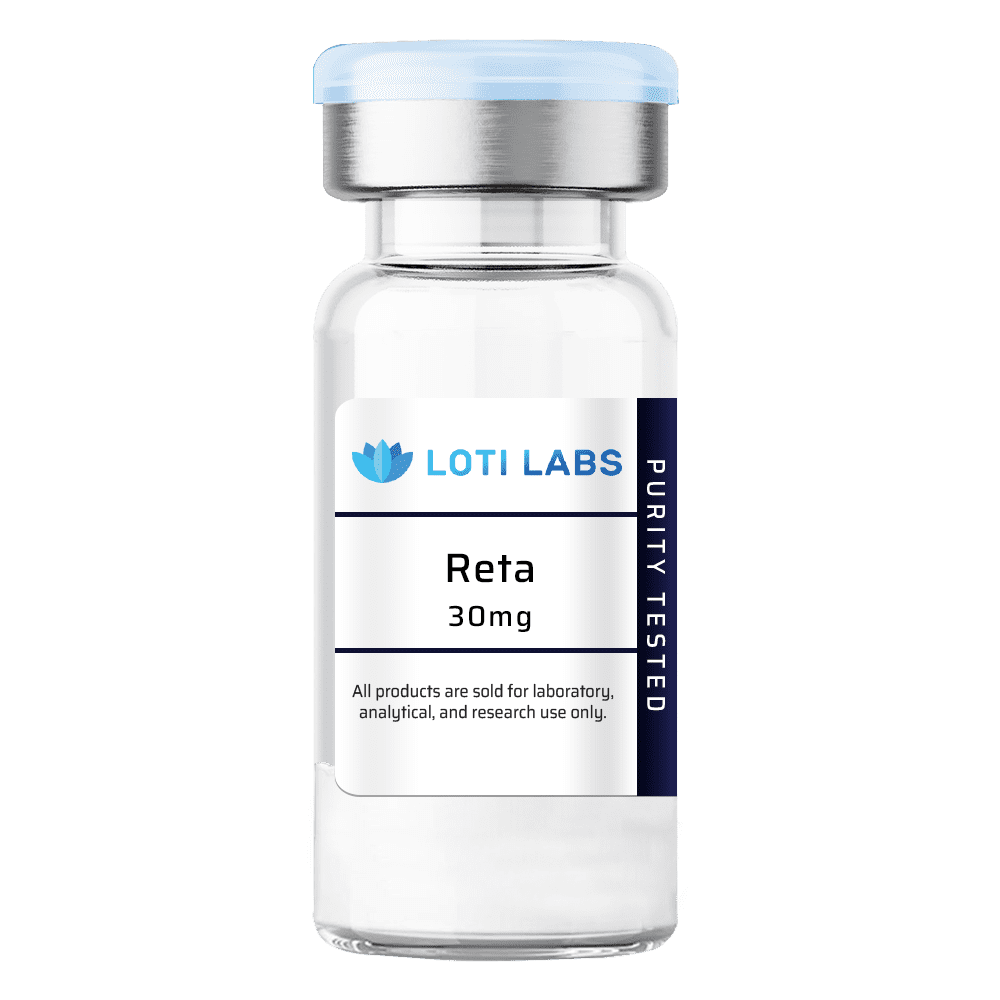
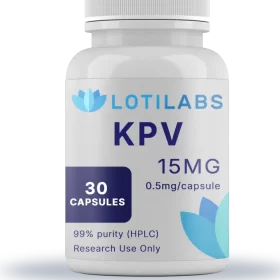
Buy Reta 30mg at Loti Labs
Molecular structure of Reta
Chemical Name: LY3437943, Synthetic peptide triple hormone receptor agonist
Molecular Formula: C233H364N56O77
Molecular Weight: 5312.8 g/mol
CAS Number: 2381089-83-2
Classification: Triple receptor agonist targeting glucagon like peptide 1 (GLP-1), glucose dependent insulinotropic polypeptide (GIP), and glucagon receptors
Reta is a synthetic peptide engineered as a novel triple glucagon hormone receptor agonist retatrutide. The molecular architecture consists of a single peptide chain conjugated to a fatty diacid moiety through acylation, which extends the half-life to approximately 6 days enabling convenient once-weekly administration for laboratory research purposes. This structural modification significantly improves pharmacokinetic properties and bioavailability compared to shorter-acting compounds.
Mechanism of action
Reta functions as a triple hormone receptor agonist with distinct potency profiles across three critical metabolic pathways. The compound demonstrates approximately 8.9 times greater potency than endogenous GIP at the human gip receptor, 0.4 times the potency of endogenous GLP-1 at GLP-1 receptors, and 0.3 times the potency of glucagon at glucagon receptors.
This engineered receptor agonist reta activates G-protein coupled receptors, initiating adenylate cyclase activation and increasing cyclic adenosine monophosphate (cAMP) levels. The resulting signaling cascades enhance insulin sensitivity, improve glycemic control, reduce food intake through appetite regulation, and increase energy expenditure through glucagon receptor agonism. The synergistic effects of multi-receptor targeting are studied for weight loss mechanisms involving reduced caloric intake and enhanced fat burning pathways.
The glucagon receptor activation specifically distinguishes Reta from existing weight loss drugs by increasing metabolic rate and promoting substantial reductions in liver fat while maintaining glucose homeostasis through balanced GLP-1 and GIP effects.
Research Studies
Retatrutide is currently under investigation for metabolic health applications in research settings.
The compound has dose dependent efficacy, lower starting dose protocols minimizes gastrointestinal adverse events while maintaining therapeutic benefit. Clinical proof of concept studies show Reta targets multiple pathways simultaneously, better than single receptor weight loss drugs.
Storage and Safety
Reta should be stored between 2°C to 8°C (36°F to 46°F) for laboratory research purposes. Store in original packaging protected from light and contamination. Do not freeze and do not expose to temperatures above 25°C as thermal degradation can affect research outcomes.
Safety profiles from early clinical trials show generally manageable tolerability. Common adverse events are gastrointestinal symptoms like nausea, vomiting and diarrhea which occur at treatment initiation and decrease over time. No serious hypoglycemia related risks have been reported in clinical studies, different from some metabolic treatments.
Proper reconstitution protocols and handling procedures are crucial for compound stability. Research applications should follow established guidelines for peptide handling and storage to ensure consistent results.
Why buy from Loti Labs
Loti Labs offers research grade Reta with high purity standards for obesity management research and metabolic studies. Our triple receptor agonist compounds undergo strict quality control to ensure consistent potency for weight loss mechanisms and energy expenditure pathways.
Key benefits:
- High purity Reta for novel triple glucagon mechanisms
- Batch to batch consistency for reproducible research outcomes
- Competitive pricing for bulk research orders for obesity mechanism studies
- Technical support for research protocols on metabolic regulation studies
- Temperature controlled shipping to maintain cold chain integrity
- Documentation to support research compliance and further investigation
Products from Loti Labs are for Research Use Only
Reta from Loti Labs is for research use only. This investigational compound is for in-vitro testing and experimental use only. Human use is strictly prohibited and not FDA approved for human or veterinary use.
This product is not a drug, food or cosmetic under the federal food, compound and cosmetic act and may not be misbranded, mislabeled or misused for human consumption. Reta requires medical supervision in clinical settings and should not be used outside approved clinical trials without proper healthcare provider oversight. Any use beyond research purposes violates intended use and may be dangerous.
Loti Labs Shipping Policy
Loti Labs ships same day for orders placed before 1pm EST Monday through Friday. Orders placed after 1pm EST or weekends ship next business day. Temperature sensitive compounds like Reta receive special cold-chain packaging to maintain product integrity during transit.
We offer special shipping options for compounds that require refrigeration to ensure research materials arrive in optimal condition for immediate use in the lab.
30 Day Money Back Guarantee
Loti Labs offers 30 day money back guarantee on all Reta purchases. Return any unopened products for full refund of purchase price. Our customer service team will assist with any order issues and provide guidance on storage and handling for lab use.
Third Party Testing of Every Batch
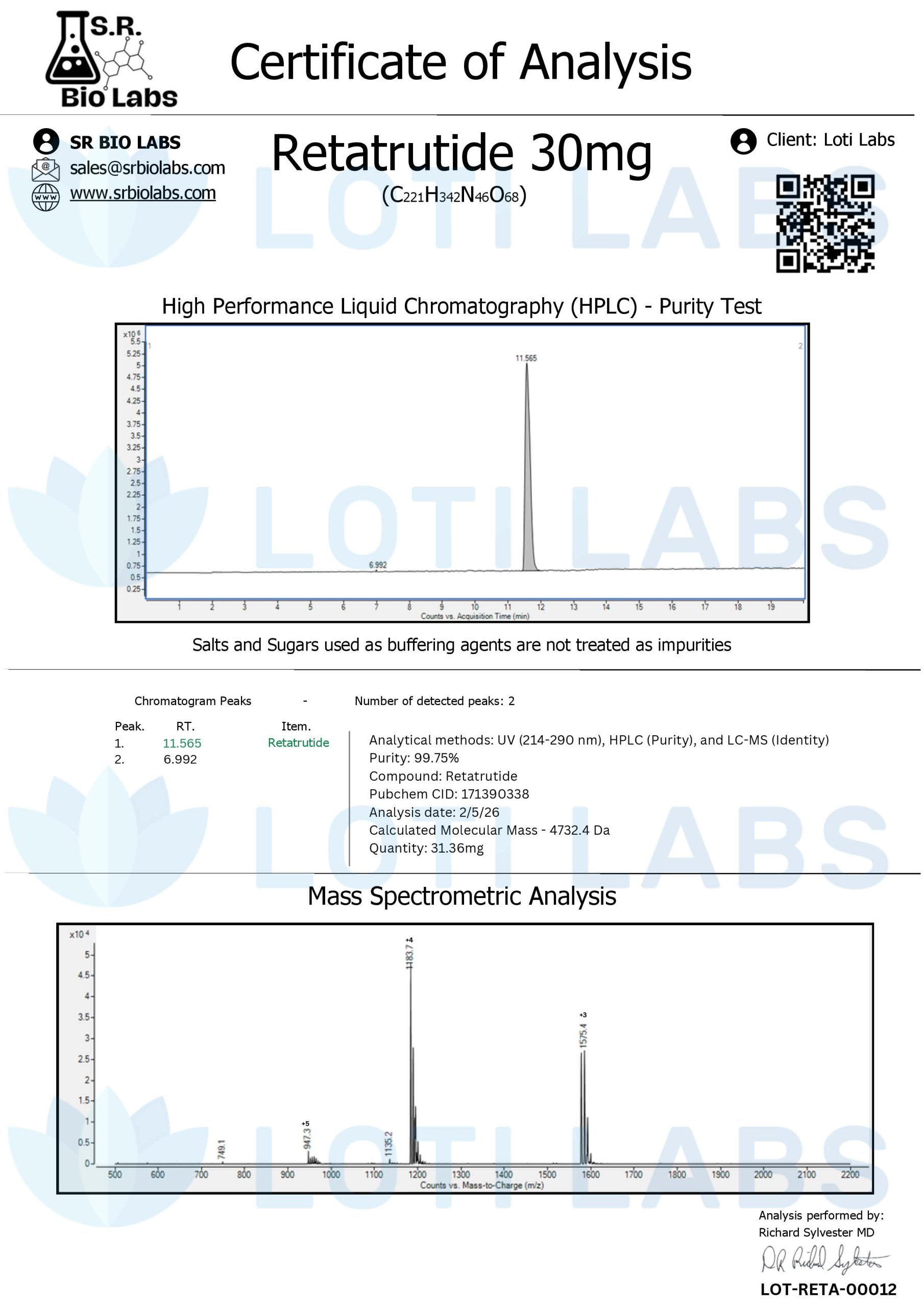
Every Reta batch is third party HPLC tested to verify purity and compound identity. Certificate of analysis is included with every shipment to confirm quality control standards exceed industry requirements for research grade peptides.
Our testing protocols ensure consistency for researchers studying Reta across metabolic disease models and related research applications.
References
- Jastreboff AM, et al. Triple–hormone-receptor agonist retatrutide for obesity — a phase 2 trial. N Engl J Med. 2023;389(6):514-526.
- Rosenstock J, et al. Reta, a GIP, GLP-1 and glucagon receptor agonist, for people with type 2 diabetes: a randomised, double-blind, placebo and active-controlled, parallel-group, phase 2 trial conducted in the USA. Lancet. 2023;402(10401):529-544.3. Coskun T, et al. LY3298176, a dual GIP and GLP-1 receptor agonist for type 2 diabetes: From discovery to proof of concept. Mol Metab. 2018;18:3-14.
- Samms RJ, et al. GIPR agonism is weight-independent and insulin sensitizing in obese mice with tirz. J Clin Invest. 2021;131(12):e146353.
Triple Agonist Mechanism: Research Context
Retatrutide is classified as a triple receptor agonist, targeting GLP-1 (glucagon-like peptide-1), GIP (glucose-dependent insulinotropic polypeptide), and glucagon receptors simultaneously. This mechanism distinguishes retatrutide from dual agonists such as tirzepatide (GLP-1/GIP) and single agonists such as semaglutide (GLP-1).
GLP-1 Receptor Activity
GLP-1 receptor agonism promotes insulin secretion, suppresses glucagon release, and slows gastric emptying. These combined effects support glucose regulation and appetite modulation in preclinical research models.
GIP Receptor Activity
GIP receptor co-agonism enhances insulin secretion in a glucose-dependent manner and may reduce gastrointestinal effects associated with standalone GLP-1 agonists. Research models also implicate GIP activity in adipose tissue regulation.
Glucagon Receptor Activity
Glucagon receptor agonism increases energy expenditure and hepatic glucose output. Research suggests glucagon activity may amplify metabolic effects observed with GLP-1/GIP co-agonism, particularly in lipid metabolism and hepatic steatosis models.
GLP Receptor Agonist Mechanism Comparison
The table below compares key mechanism characteristics across the major GLP receptor agonist classes currently under investigation or approved for clinical use.
| Compound |
Receptor Targets |
Agonist Class |
Primary Research Application |
| Retatrutide |
GLP-1 / GIP / Glucagon |
Triple agonist |
Metabolic research, energy expenditure models |
| Tirzepatide |
GLP-1 / GIP |
Dual agonist |
Glucose regulation, adiposity research |
| Semaglutide |
GLP-1 |
Single agonist |
Glucose regulation, appetite suppression research |
Structural Engineering and Classification of Triple-Agonist Peptides
Retatrutide is classified as a third-generation incretin mimetic, representing a significant evolution in peptide engineering beyond first-generation (GLP-1 mono-agonists) and second-generation (GLP-1/GIP dual-agonists) therapies. This investigational compound is a 39-amino acid peptide constructed on a structural scaffold derived from the GIP (Glucose-dependent Insulinotropic Polypeptide) molecule. This specific GIP-based backbone serves as the foundation for its balanced affinity across three distinct metabolic receptors. The chemical design prioritizes metabolic stability and sustained bioavailability, features essential for chronic research applications involving metabolic signaling pathways.
A critical structural modification in this peptide is the substitution of aminoisobutyric acid (Aib) at position 2. This targeted amino acid replacement is specifically engineered to grant the molecule resistance to proteolytic degradation by the dipeptidyl peptidase-4 (DPP-4) enzyme. By shielding the peptide from rapid enzymatic breakdown, this modification extends the half-life of the compound, allowing for infrequent administration in longitudinal research models. This “Triple G” agonist (GIP, GLP-1, and Glucagon) represents the current vanguard of multi-receptor pharmacology. As an investigational research compound, it has not yet received FDA approval for clinical use, with Phase 3 regulatory milestones and development programs anticipated to conclude in early 2026.
Intracellular Signaling Pathways and Hepatic Lipid Metabolism
The pharmacological profile of retatrutide is distinguished by its recruitment of the glucagon receptor alongside GIP and GLP-1 pathways, introducing a unique metabolic dimension involving thermogenesis. Activation of the glucagon receptor facilitates a shift in the Respiratory Exchange Ratio (RER), indicating a transition in cellular substrate utilization toward enhanced fatty acid oxidation. This mechanism is theorized to occur through the stimulation of thermogenic activity in brown and beige adipose tissue, potentially increasing resting energy expenditure. Unlike traditional incretins that primarily manage calorie intake, the inclusion of glucagon agonism allows researchers to investigate active metabolic “defatting” through increased caloric demand at a cellular level.
At the intracellular level, the compound initiates a G-protein-coupled signaling cascade that leads to the activation of Protein Kinase A (PKA). This PKA-dependent pathway is central to the compound’s ability to modulate gene expression related to lipid and glucose metabolism. Specifically, research focus has been placed on direct hepatic lipid oxidation, where glucagon receptor signaling in the liver may independently reduce intrahepatic lipid accumulation. This direct signaling is distinct from indirect lipid reduction driven by systemic caloric deficits. By targeting the PKA pathway, the compound influences hepatic glucose production and lipid clearance, providing a multifaceted approach to investigating non-alcoholic fatty liver conditions and broader cardiometabolic signaling in preclinical research frameworks.
Regulatory and Research Status: 2026
As of 2026, retatrutide holds Investigational New Drug (IND) status and has not received FDA approval for any indication. It is available exclusively for preclinical and laboratory research purposes.
- Retatrutide: IND stage — not FDA approved. Research use only.
- Tirzepatide: FDA approved (Mounjaro® for type 2 diabetes; Zepbound® for chronic weight management).
- Semaglutide: FDA approved (Ozempic® for type 2 diabetes; Wegovy® for chronic weight management).
This compound is supplied for research purposes only. Not for human use. No claims are made regarding safety or efficacy in humans.
{
“@context”: “https://schema.org”,
“@type”: “FAQPage”,
“mainEntity”: [
{
“@type”: “Question”,
“name”: “What is Retatrutide 30mg used for in laboratory research?”,
“acceptedAnswer”: {
“@type”: “Answer”,
“text”: “Retatrutide 30mg is a bulk research formulation designed for high-throughput or extended laboratory studies investigating triple GIP/GLP-1/glucagon receptor agonism. It is sold exclusively for in vitro and preclinical research purposes and is not intended for human administration.”
}
},
{
“@type”: “Question”,
“name”: “What makes Retatrutide’s mechanism distinct from other GLP-1 compounds in research?”,
“acceptedAnswer”: {
“@type”: “Answer”,
“text”: “Retatrutide is a triple agonist u2014 it activates GIP, GLP-1, and glucagon receptors concurrently. Research models suggest this multi-target mechanism may produce broader metabolic effects than single or dual agonists, including distinct impacts on hepatic fat, energy expenditure, and glycemic regulation pathways.”
}
},
{
“@type”: “Question”,
“name”: “What clinical research has been published on Retatrutide?”,
“acceptedAnswer”: {
“@type”: “Answer”,
“text”: “Key publications include Jastreboff et al. (2023) in the New England Journal of Medicine (Phase 2 results at 48 weeks) and Rosenstock et al. in related metabolic research. The TRIUMPH Phase 3 program (including NCT05579782) is ongoing as of 2026.”
}
},
{
“@type”: “Question”,
“name”: “Is Retatrutide 30mg suitable for chronic research protocols?”,
“acceptedAnswer”: {
“@type”: “Answer”,
“text”: “Retatrutide 30mg is suitable for extended laboratory protocols given its structural stability at recommended storage temperatures. Researchers should validate compound activity at the start of each study and follow reconstitution protocols to maintain potency over multi-week experiments.”
}
},
{
“@type”: “Question”,
“name”: “Is Retatrutide 30mg FDA-approved or available for clinical use?”,
“acceptedAnswer”: {
“@type”: “Answer”,
“text”: “No. Retatrutide has not received FDA approval as of 2026. The 30mg product sold by Loti Labs is a research-grade compound for laboratory use only u2014 it is not intended to diagnose, treat, cure, or prevent any disease or condition.”
}
}
]
}