
Text "Loti" to 833-962-6682 And Receive An Instant 20% Off Code! Dismiss
Skip to contentThis product is intended as a research chemical only. This designation allows the use of this chemical strictly for in-vitro laboratory testing and experimentation. Human or veterinary use is strictly forbidden. This product is not a drug, food or cosmetic and may not be misbranded, mislabeled or misused as such.
| Weight | 0.008125 lbs |
|---|
⚠️ Disclaimer: THIS PRODUCT, SOLD BY LOTI LABS, IS INTENDED AS A RESEARCH CHEMICAL ONLY.
This designation allows the use of this chemical strictly for in-vitro laboratory testing and experimentation. No other uses or purposes are permitted. All information provided on this website is for educational purposes and has been compiled from multiple sources believed to be accurate. Human or animal use of this product is strictly forbidden by law. This product is not a drug, food or cosmetic and may not be misbranded, mislabeled or misused as such. Anyone not adhering to these terms will be blacklisted and forbidden from purchasing.
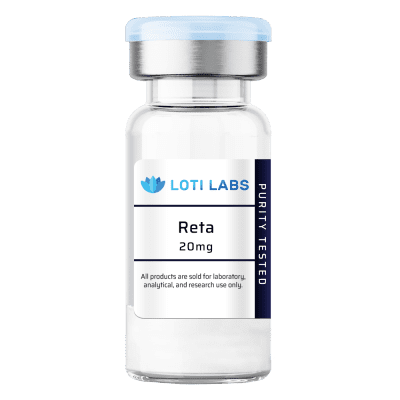
Research into new triple glucagon receptor agonists has uncovered promising compounds for metabolic studies and Reta is one of them. This is a breakthrough in metabolic research applications where you can study a triple hormone receptor agonist that targets multiple pathways involved in glucose metabolism and energy expenditure.
Current clinical trials on this compound have generated a lot of interest in the research community especially on its application in metabolic health, obesity and related conditions. Research shows that Reta’s mechanism of action may give valuable insights on hormone receptor activity and metabolic pathway interactions.
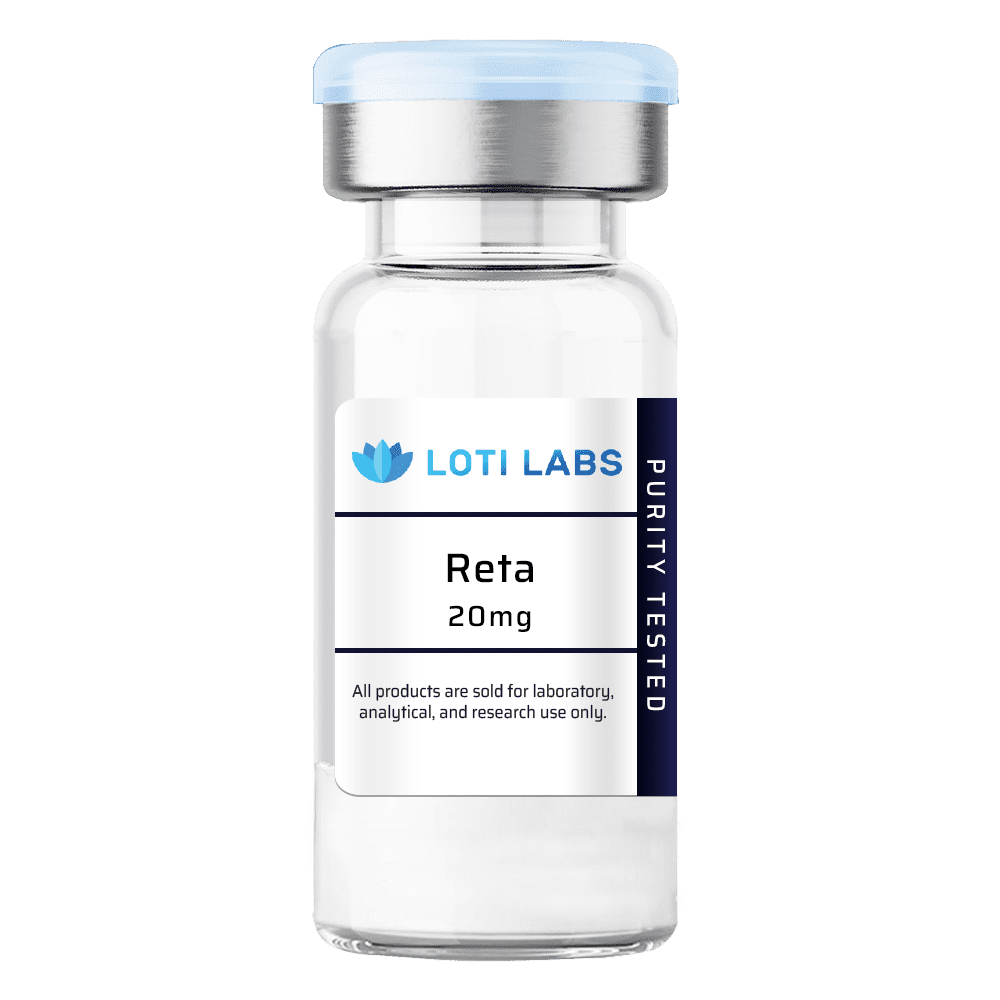
For researchers who want to buy Reta 20mg for their laboratory studies, understanding the compound’s molecular properties, mechanism of action and handling requirements is crucial for successful experimental outcomes.
Reta is a triple hormone receptor agonist that targets glucagon like peptide 1 (GLP-1), glucose dependent insulinotropic polypeptide (GIP) and glucagon receptors. This triple gip/GLP-1/glucagon receptor approach is different from single target compounds being investigated.
Key Molecular Properties:
| Property | Specification |
|---|---|
| Amino Sequence | Triple hormone receptor agonist targeting GLP-1, GIP and glucagon receptors |
| Molecular Formula | C228H350N50O70 |
| Molecular Weight | 4731.33 g/mol |
| CAS Number | 2381089-83-2 |
| PubChem CID | SID 474492335 |
| Classification | Novel triple glucagon receptor agonist |
The compound’s large molecular weight and complex amino acid sequence reflects its design as a single peptide that can activate multiple receptor pathways at the same time. This molecular architecture allows researchers to study the integrated effects of multi-pathway activation in laboratory settings.
Research shows that the long half life of this compound makes it suitable for studies that require sustained receptor activity over a long period. The molecular structure is stable under proper storage conditions to give consistent results across multiple research applications.
Reta works through a triple agonist mechanism that activates three different hormone receptor pathways. Research shows this may give more metabolic effects compared to compounds that target individual receptors.
The compound shows significant activity at GLP-1 receptors which regulates glucose levels and energy expenditure. Studies have shown that GLP-1 receptor agonist activity affects multiple metabolic pathways including glucose production and insulin sensitivity.
As a glucose dependent insulinotropic receptor agonist Reta interacts with gastric inhibitory polypeptide pathways. Research shows this mechanism contributes to glycemic control and may affect adipose tissue metabolism in experimental models.
The glucagon receptor agonist properties of this compound affects hepatic glucose production and energy metabolism. Preclinical studies suggest this activity may affect liver fat metabolism and overall metabolic health parameters.
Research shows that this triple agonist approach gives synergistic effects that are more than the sum of individual pathway activations. Studies on receptor activity show that simultaneous targeting of these pathways gives significant improvements in multiple metabolic parameters.
Current clinical studies on Reta have generated valuable data on its research applications and mechanisms. The compound has progressed through multiple phases of investigation and has generated a lot of research interest.
Phase 2 clinical trials showed dose dependent responses across multiple metabolic parameters. Research shows that participants who received higher doses (8-12mg) had significant improvements with 79-93% achieving meaningful metabolic changes. These findings have guided current research protocols and dosing strategies.
Key research observations include:
Current Phase 3 TRIUMPH trials are investigating optimal research protocols including potential formulations for enhanced research applications. These clinical studies are looking at various dosing strategies and their effects on multiple endpoints.
Research protocols in these trials include:
Clinical proof from various studies suggests potential applications in multiple research areas. Studies have looked at effects on:
At least one dose level showed activity across multiple endpoints, more research needed to determine optimal protocol.
Proper storage and handling of Reta is crucial to maintain compound integrity and research results. The substance requires specific conditions to preserve molecular structure and biological activity.
| Parameter | Specification |
|---|---|
| Temperature | 2°C to 8°C (36°F to 46°F) |
| Light Protection | Store in original packaging, protect from light |
| Humidity | Controlled environment, avoid moisture |
| Temperature Limits | Never freeze; avoid exposure above 30°C |
Researchers must maintain refrigerated storage conditions throughout the compound’s lifecycle. Temperature fluctuations can compromise molecular integrity and affect experimental outcomes.
Follow proper handling procedures to ensure compound stability:
Studies have shown mild-to-moderate GI responses during administration. Consider in your research protocol.
The safety profile from clinical trials is useful for researchers planning lab studies. Understand these patterns to design and monitor your protocol.
Loti Labs offers high quality research compounds for lab use. They are committed to quality assurance and research compliance, making them the best source to buy Reta 20mg for your research.
All products sold by Loti Labs are research chemicals only. Research use only. Not for human consumption or veterinary use. Not a substance for human use, food or cosmetics and may not be misbranded, mislabeled or misused as such.
This research only designation ensures compliance with regulatory requirements and maintains scientific integrity. Researchers must follow institutional guidelines and regulatory frameworks when purchasing and using these compounds.
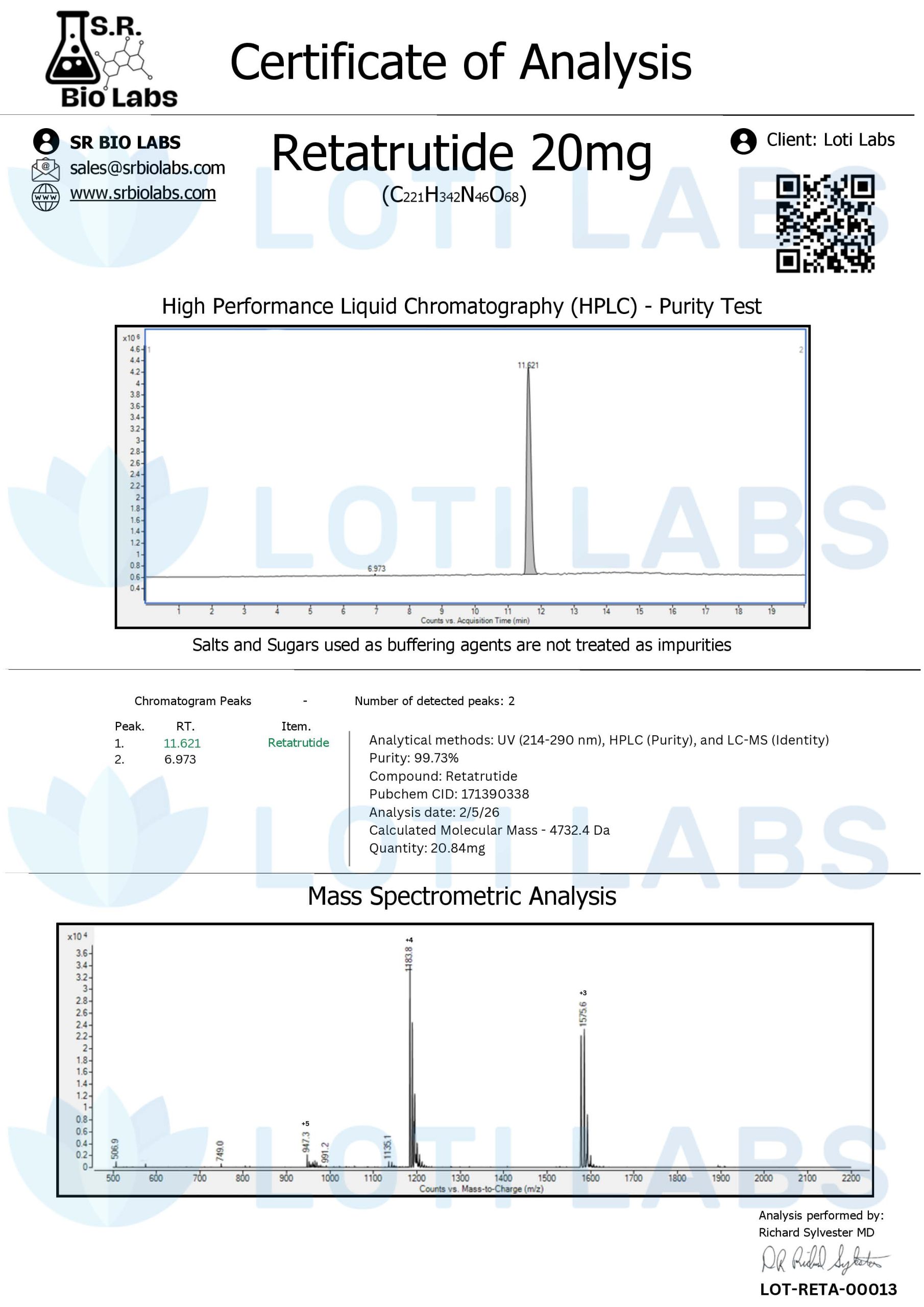
Every batch of compounds sold by Loti Labs is tested by a third party using High-Performance Liquid Chromatography (HPLC) to ensure product purity and accuracy. This comprehensive testing protocol gives researchers confidence in their materials.
Testing Includes:
Loti Labs ships same day for orders placed before 1 PM EST, Monday through Friday. Orders placed after 1 PM EST or on weekends ship the next business day. We maintain cold chain during shipping to preserve compound integrity. Specialized packaging to keep temperature stable during delivery.
30 day satisfaction guarantee on all products. Researchers can return any unopened products for a full refund of the purchase price of unused materials. We stand behind our products.
Current research suggests many applications for Reta in research. The triple agonist mechanism provides researchers opportunities to study complex metabolic interactions.
Research indicates applications in:
Researchers can use Reta compared to other compounds to understand mechanism differences. Studies comparing single receptor agonists to this triple agonist approach will provide valuable insights into metabolic pathway interactions.
The small sample size of current studies provides opportunities for researchers to add to the scientific understanding of this compound class.
When designing studies with Reta consider:
Retatrutide is classified as a triple receptor agonist, targeting GLP-1 (glucagon-like peptide-1), GIP (glucose-dependent insulinotropic polypeptide), and glucagon receptors simultaneously. This mechanism distinguishes retatrutide from dual agonists such as tirzepatide (GLP-1/GIP) and single agonists such as semaglutide (GLP-1).
GLP-1 receptor agonism promotes insulin secretion, suppresses glucagon release, and slows gastric emptying. These combined effects support glucose regulation and appetite modulation in preclinical research models.
GIP receptor co-agonism enhances insulin secretion in a glucose-dependent manner and may reduce gastrointestinal effects associated with standalone GLP-1 agonists. Research models also implicate GIP activity in adipose tissue regulation.
Glucagon receptor agonism increases energy expenditure and hepatic glucose output. Research suggests glucagon activity may amplify metabolic effects observed with GLP-1/GIP co-agonism, particularly in lipid metabolism and hepatic steatosis models.
The table below compares key mechanism characteristics across the major GLP receptor agonist classes currently under investigation or approved for clinical use.
| Compound | Receptor Targets | Agonist Class | Primary Research Application |
|---|---|---|---|
| Retatrutide | GLP-1 / GIP / Glucagon | Triple agonist | Metabolic research, energy expenditure models |
| Tirzepatide | GLP-1 / GIP | Dual agonist | Glucose regulation, adiposity research |
| Semaglutide | GLP-1 | Single agonist | Glucose regulation, appetite suppression research |
As of 2026, retatrutide holds Investigational New Drug (IND) status and has not received FDA approval for any indication. It is available exclusively for preclinical and laboratory research purposes.
This compound is supplied for research purposes only. Not for human use. No claims are made regarding safety or efficacy in humans.
Reta is a game changer in metabolic research, a triple hormone receptor agonist with unique mechanisms of action. The compound’s simultaneous targeting of GLP-1, GIP and glucagon receptors provides valuable research opportunities to study complex metabolic interactions.
If you need to buy Reta 20mg for your research, Loti Labs offers high quality compounds with comprehensive quality assurance. They are committed to research compliance, third party testing and customer satisfaction.
The growing body of research on this compound suggests a lot of potential to advance our understanding of metabolic pathways and hormone receptor interactions. As more clinical data becomes available, researchers have unprecedented opportunities to contribute to this area of research.
To purchase Reta 20mg for your research, contact Loti Labs today and experience their commitment to science and research integrity. They support the research community to ensure you get the highest quality compounds for your research needs.
The molecular architecture of retatrutide represents a significant evolution in peptide engineering, moving beyond the standard GLP-1 templates. Unlike earlier mono-agonists, this compound is built upon a glucose-dependent insulinotropic polypeptide (GIP) backbone. This GIP-based scaffold serves as the foundation for its multi-receptor activity, allowing for the strategic integration of sequences that target both the GLP-1 and glucagon receptors. This chimeric approach enables a single peptide chain to exhibit potent agonism across three distinct metabolic pathways, a characteristic often referred to as “triple agonism” in biochemical research.
To ensure prolonged biological activity in vivo, the peptide incorporates specific amino acid modifications designed to resist enzymatic degradation. A critical feature is the inclusion of alpha-aminoisobutyric acid (Aib) at the second and twentieth positions of the peptide chain. These substitutions are specifically engineered to block the action of dipeptidyl peptidase-4 (DPP-4), the primary enzyme responsible for the rapid breakdown of endogenous incretin hormones. Furthermore, the molecule is conjugated with a fatty diacid moiety—typically a C20 chain—at the Lys17 or Lys30 position. This acylation facilitates reversible binding to serum albumin, which significantly reduces renal clearance and extends the circulating half-life to approximately six days, making it a robust tool for long-term metabolic research.
Research into retatrutide focuses heavily on its unique differential receptor potency, characterized by a specific hierarchy of activation. Pharmacological studies utilizing EC50 values indicate that the compound exhibits its highest potency at the GIP receptor, followed by the GLP-1 receptor, and finally the glucagon receptor. This “GIP-dominant” profile is essential for researchers investigating the synergistic effects of multiple metabolic drivers. While traditional research focused solely on insulin secretion, the inclusion of glucagon receptor (GCGR) agonism introduces a novel dimension: the stimulation of energy expenditure through thermogenesis and the potential browning of white adipose tissue.
The glucagon component is of particular interest in hepatology and metabolic research due to its role in promoting lipolysis and increasing mitochondrial activity. In research models, the compound is being evaluated for its impact on hepatic fat content and its application in studies involving Metabolic Dysfunction-Associated Steatotic Liver Disease (MASLD). A key area of inquiry is the homeostatic balance achieved by the peptide; the insulinotropic effects of the GIP and GLP-1 components are hypothesized to offset the glucagon-stimulated hepatic glucose production. As an investigational new drug (IND), the compound is currently restricted to research settings. The global regulatory landscape suggests that primary filings for approval may not occur until late 2026 or 2027, maintaining its status as a critical subject for ongoing preclinical and academic investigation.
Check out these references for more information on Reta development, clinical trials and research.
{
“@context”: “https://schema.org”,
“@type”: “FAQPage”,
“mainEntity”: [
{
“@type”: “Question”,
“name”: “What is Retatrutide 20mg and why is it used in research?”,
“acceptedAnswer”: {
“@type”: “Answer”,
“text”: “Retatrutide 20mg is a higher-dose research formulation for laboratory investigations of triple-receptor agonism (GIP, GLP-1, glucagon). It is designed for studies requiring larger quantities per experiment and is not intended for clinical or human use.”
}
},
{
“@type”: “Question”,
“name”: “What Phase 3 trials are ongoing for Retatrutide?”,
“acceptedAnswer”: {
“@type”: “Answer”,
“text”: “The TRIUMPH Phase 3 program includes multiple trials (e.g., NCT05579782) evaluating retatrutide in various metabolic contexts. These trials follow Phase 2 results published in NEJM (2023) showing notable effects at 12mg over 48 weeks. Phase 3 data is expected to be reported in 2025u20132026.”
}
},
{
“@type”: “Question”,
“name”: “How does Retatrutide’s glucagon receptor component affect metabolic research?”,
“acceptedAnswer”: {
“@type”: “Answer”,
“text”: “The glucagon receptor agonism component of retatrutide is a key differentiator studied in metabolic research. Laboratory data suggests it contributes to hepatic fat reduction and thermogenic effects distinct from GLP-1/GIP dual agonists, making it a useful comparator compound in liver metabolism and energy expenditure studies.”
}
},
{
“@type”: “Question”,
“name”: “Is Retatrutide 20mg approved for clinical use?”,
“acceptedAnswer”: {
“@type”: “Answer”,
“text”: “No. Retatrutide remains in Phase 3 clinical trials as of 2026 and is not FDA-approved for any clinical indication. The 20mg product sold by Loti Labs is strictly for laboratory research use only.”
}
},
{
“@type”: “Question”,
“name”: “What storage conditions are required for Retatrutide 20mg?”,
“acceptedAnswer”: {
“@type”: “Answer”,
“text”: “Store lyophilized Retatrutide 20mg at -20u00b0C in a dry environment. Reconstitute with sterile bacteriostatic water for injections per your research protocol. Once reconstituted, store at 2u20138u00b0C and use within 14 days. Discard if visible particles appear.”
}
}
]
}
$23.99 - $29.99
You save
$26.39 - $32.99
You save
$23.99 - $29.99
You save
$31.99 - $39.99
You save
$39.99 - $49.99
You save
$63.99 - $79.99
You save
$19.99 - $24.99
You save
$26.39 - $32.99
You save
Support when you need it. Perks when you want them.
Talk to a real person or sign up for early access to new compounds.
$39.99 - $49.99
You save
$39.99 - $49.99
You save
$39.99 - $49.99
You save
$79.99 - $99.99
You save
$71.99 - $89.99
You save
$71.99 - $89.99
You save
$31.99 - $39.99
You save
$23.99 - $29.99
You save
$63.99 - $79.99
You save
$63.99 - $79.99
You save
$55.99 - $69.99
You save
$59.99 - $74.99
You save
$47.99 - $59.99
You save
$31.99 - $39.99
You save
$31.99 - $39.99
You save
$59.99 - $74.99
You save
$1.59 - $1.99
You save
$28.79 - $35.99
You save
$31.99 - $39.99
You save
$31.99 - $39.99
You save
$31.99 - $39.99
You save
$39.99 - $49.99
You save
$39.99 - $49.99
You save
$47.99 - $59.99
You save